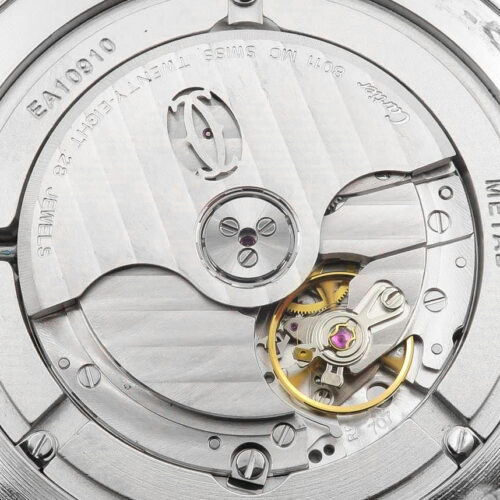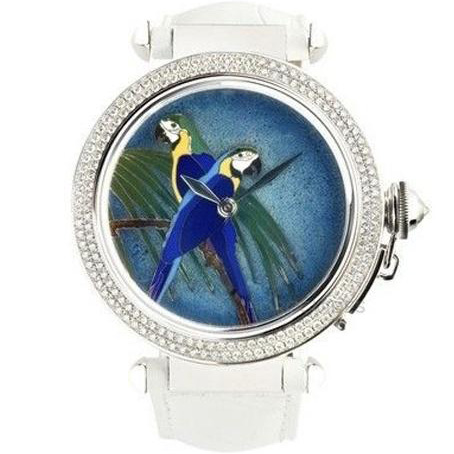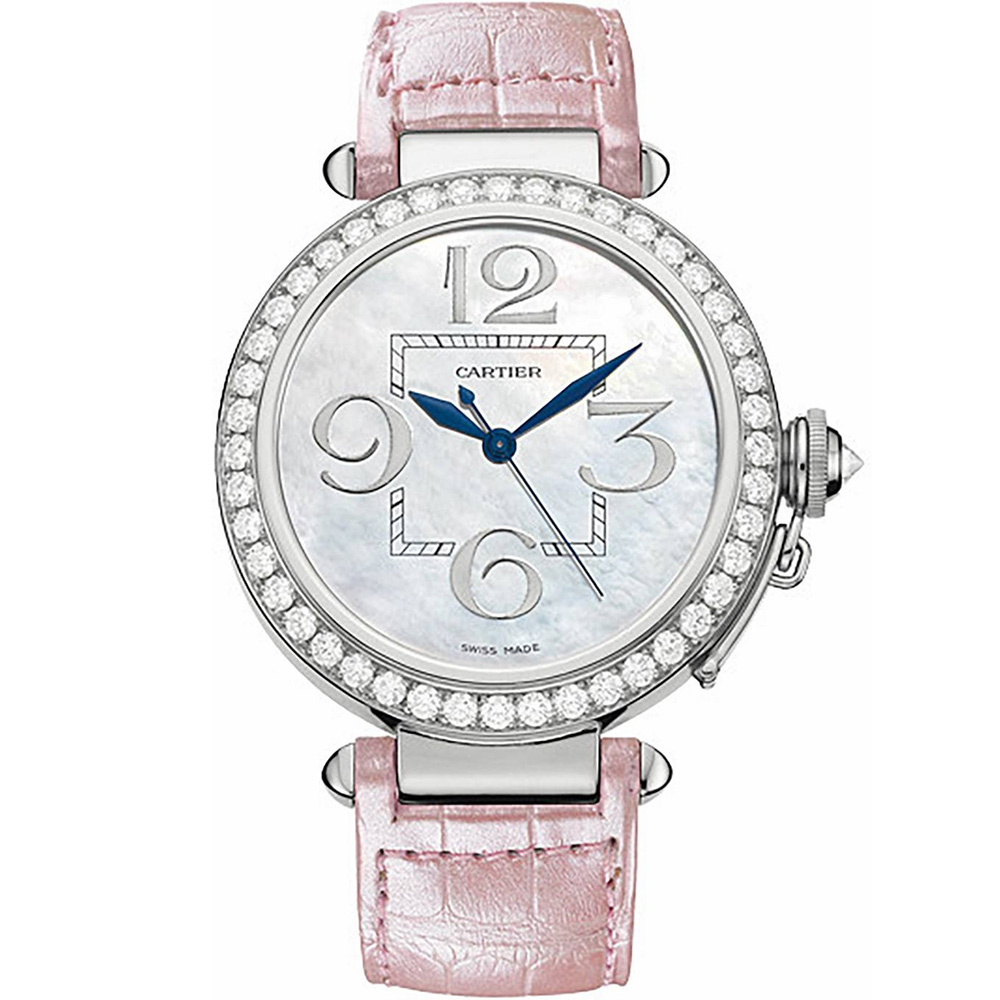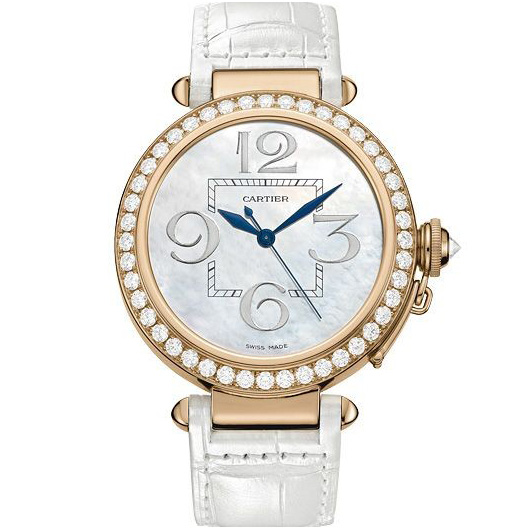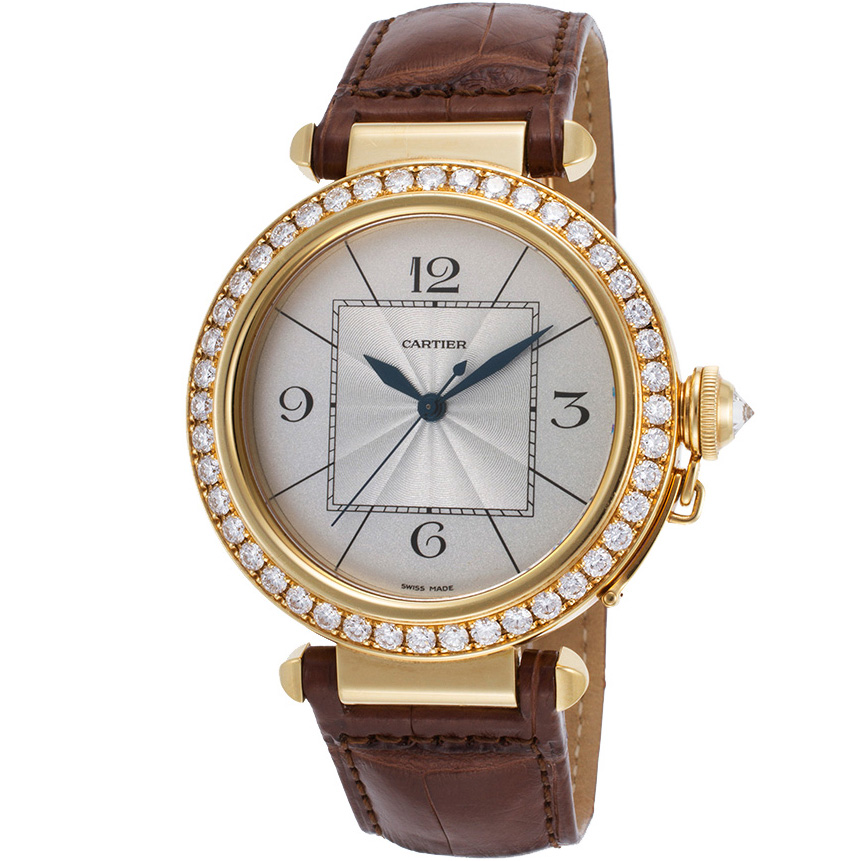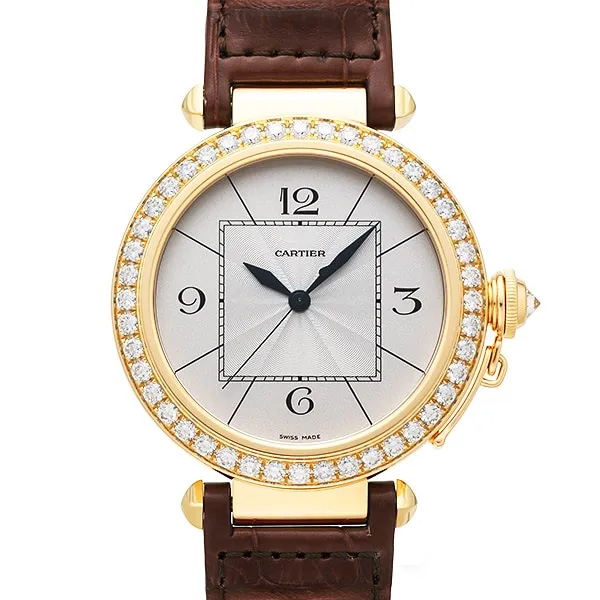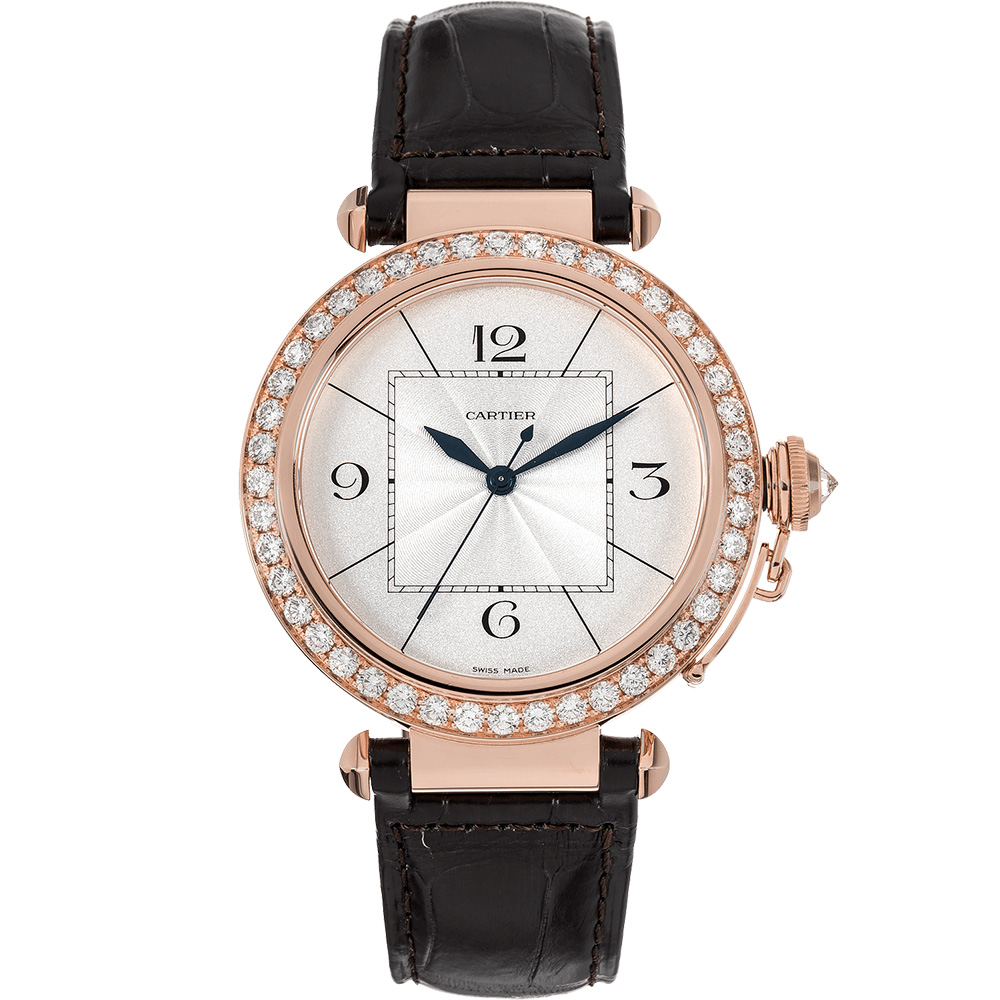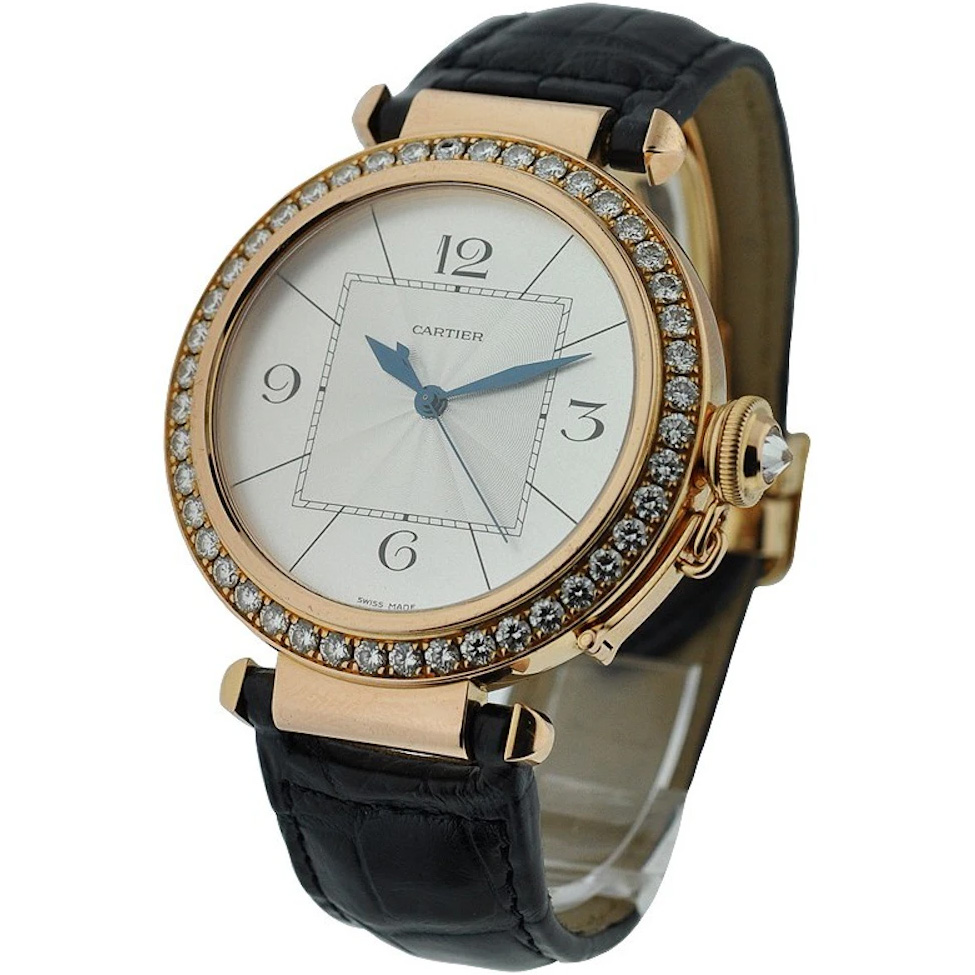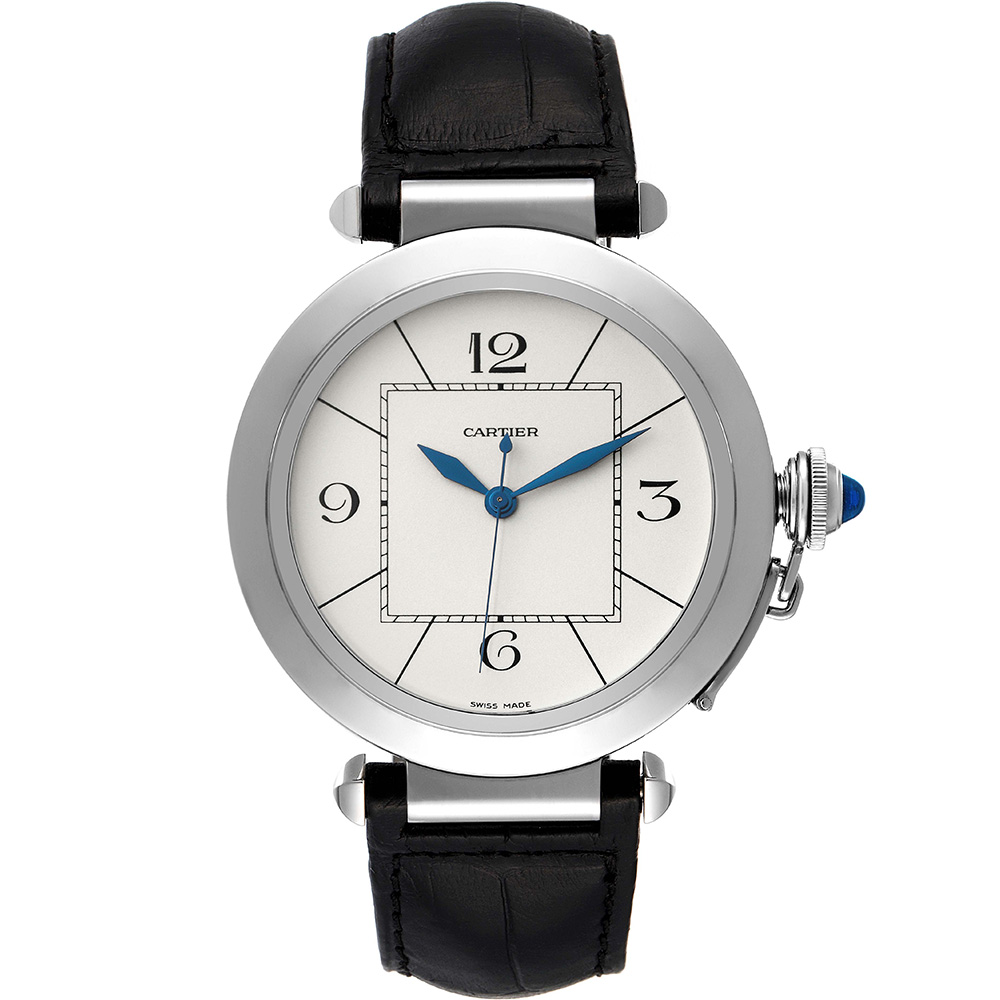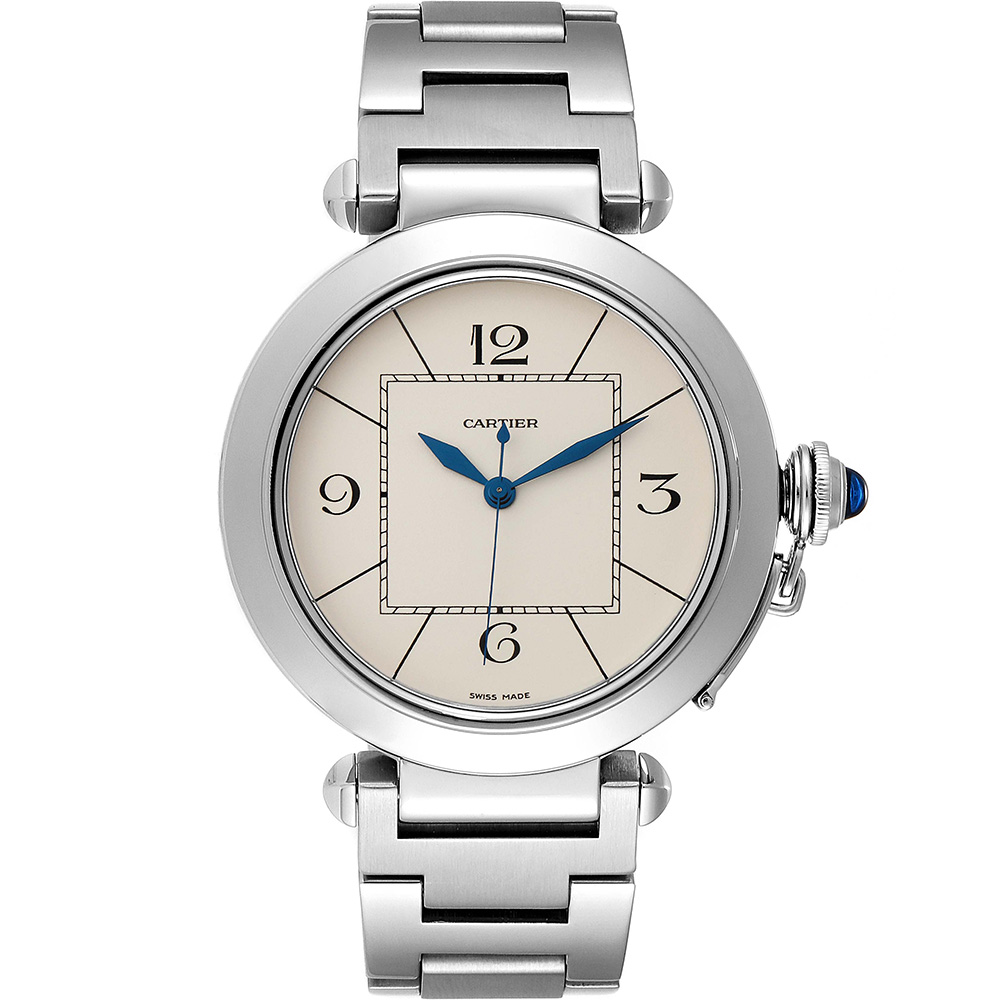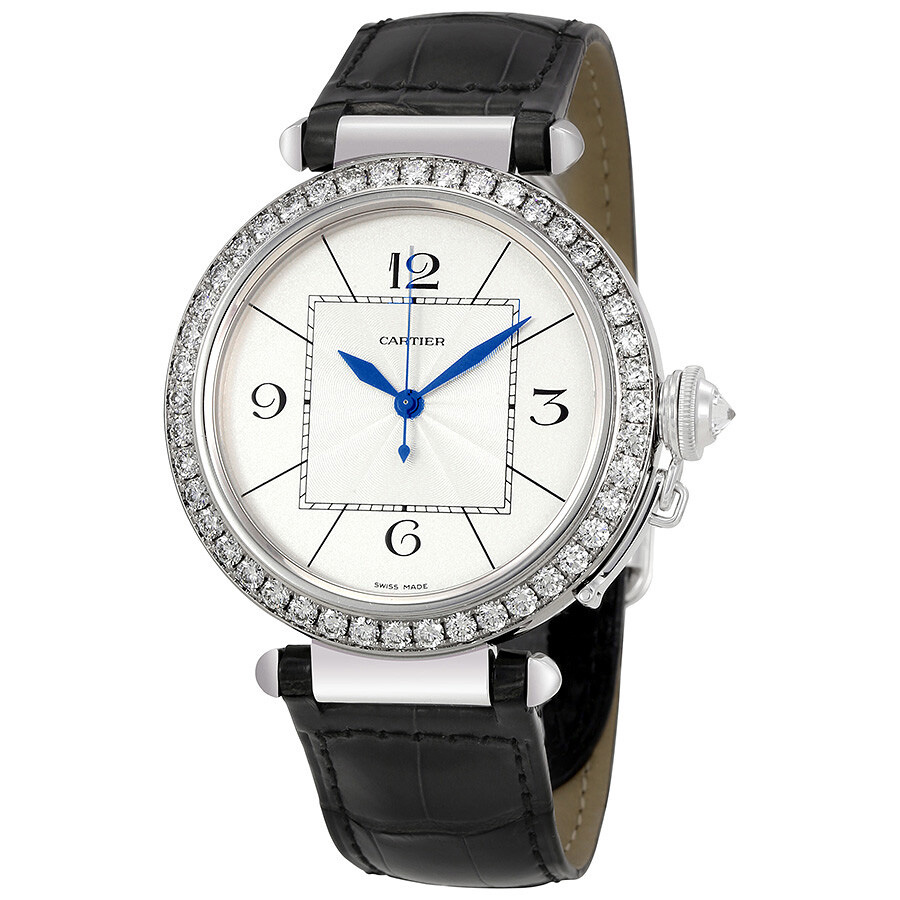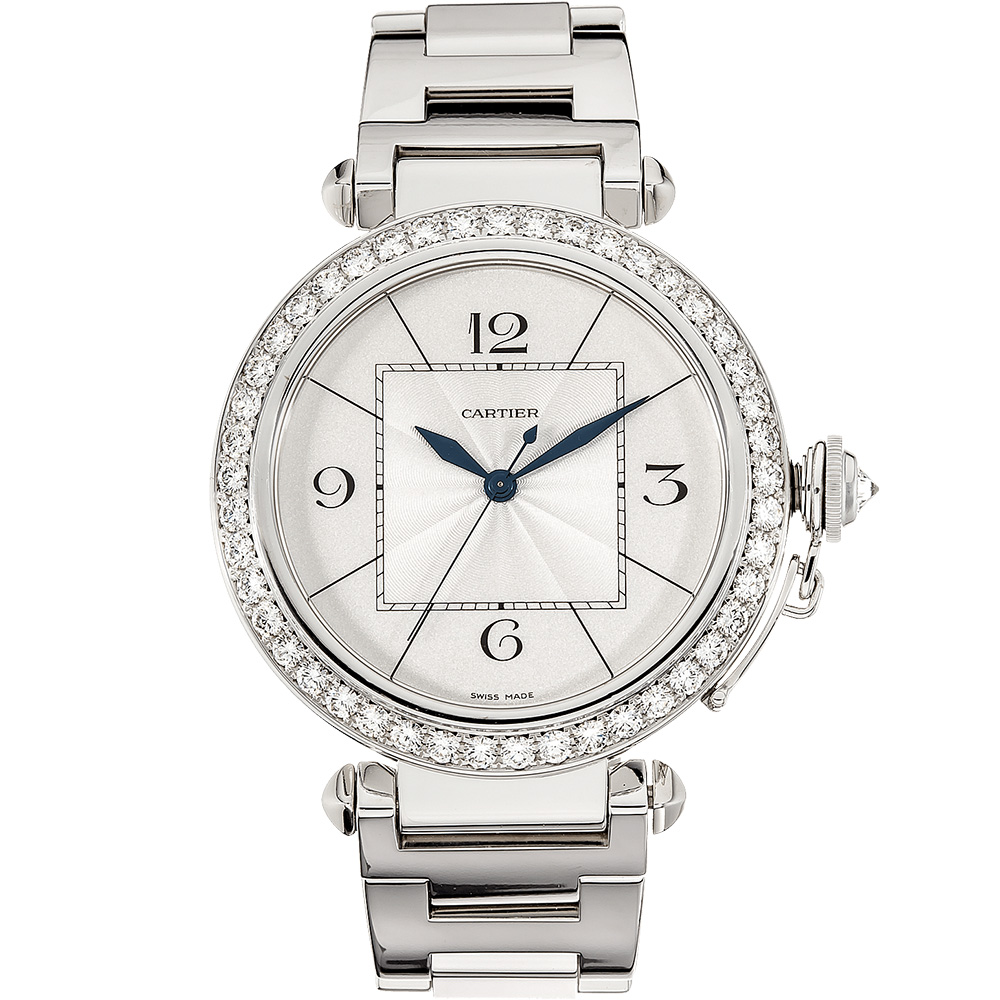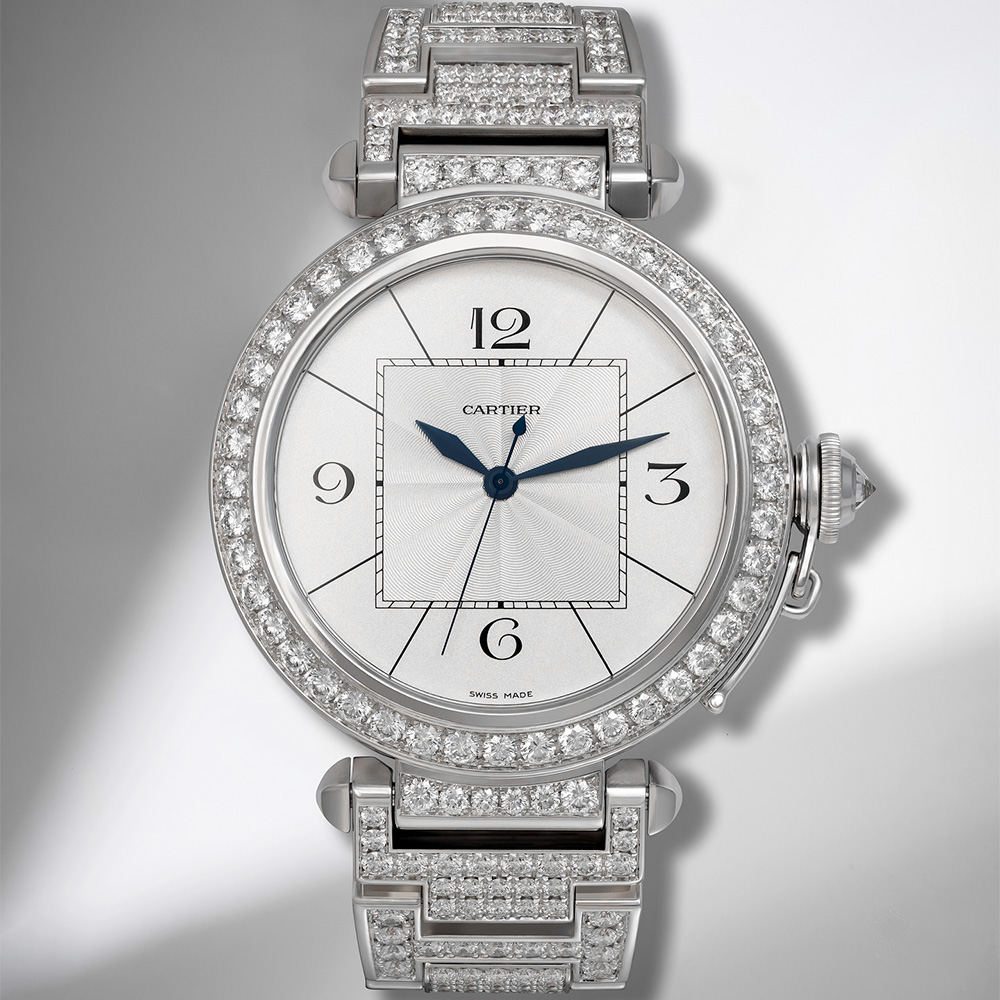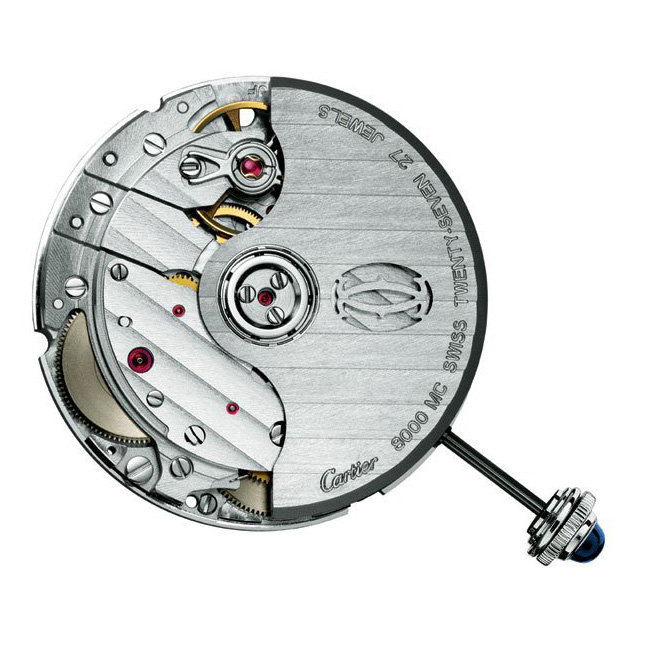
(Mechanical movement Cal. 8000MC manufactured with automatic winding, Size 11-1/2 lignes, 25.6mm, Thickness 3.85mm, Number of Rubies 27, 28,800vph, 179 components, power reserve around 52 hours, Double barrel, Automatic clickwork winding)
Cartier and Jaeger-LeCoultre, A meeting that was meant to happen
In 1847 Louis-Francois Cartier founds the Maison Cartier. Very quickly the jeweller earns international fame and becomes the official supplier to several Royal Courts all over the world. The first watch making creations can be traced to the second half of the 19th century in the Cartier archives of Rue de la Paix. At the time, Cartier entrusts the movements of their watches to the greatest watchmakers of their time (Vacheron, Constantin, Bredillard, Dagonneau, Prevost, Verger). The year of 1898 is the true stepping stone for the jeweller’s watch making activity, it is the year Louis Cartier joins his father. Creations gather momentum and the need for a creative rapport with a movement manufacturer becomes greater and greater. Jaeger will be the manufacturer chosen by Cartier; like two peas in a pod, both share an immense curiosity and an acute sense of innovation.
Established in Paris since1880, the Alsatian watchmaker and inventor, Edmond Jaeger, (1858-1922) has an immense prestige and is greatly honoured by all the profession. In 1903, Cartier is Edmond Jaeger’s main client. Projects are growing in number and the watchmaker, who only has a small workshop in Paris, can no longer answer Cartier’s demands and finds it even more difficult to develop the extra-flat calibres Cartier has invented. Cartier needs to expand and wants the best; hence they call on Jacques-David LeCoultre.
The Manufacture LeCoultre & Cie was created in 1833 in the Joux valley, it is a family business managed by Jacques-David LeCoultre and his father. At the time the Manufacture boasted of 500 employees that master to perfection all the watch making skills.
In April 1903 the relationship between Edmond Jaeger and Jacques-David LeCoultre grows stronger. Together, they decide to make and manufacture a new generation of extra-flat calibres. These extraordinary movements make it possible to conciliate the very small sizes of wristwatches to the precision and accuracy of the mechanism.
A true partnership is born; which will later lead up to the creation of the Jaeger-LeCoultre brand.
Art and know-how, the root and form of the business, audacity as the key to a forecasted success.
The Cartier brothers were true trailblazers as they foresaw the prestigious future that the wristwatch could have. In 1907 they sign a contract with Edmond Jaeger, in which the watch maker guarantees them the exclusivity of the chronometer production, as well as of watches with a flat movement and all future inventions. The only thing the Cartier brothers offer as collateral is a minimum guaranteed order. This same year, the Manufacture LeCoultre produces the flattest calibre in the world, then 2 years later, a minute rectangular calibre. These technical marvels will also equip Cartier models. Cartier forwards to Edmond Jaeger’s Parisian workshop the drawings of their innovative watch making creations. Jaeger and LeCoultre are in charge of solving the technical problems and of manufacturing them. They are perfect exchanges; thanks to them we have the Santos de Cartier and the Tank watches, but also eclipse pocket watches and the 8-day wristwatches, etc.
The year 2005 updates the technical know-how thanks to the 8000 MC caliber the Pasha de Cartier 42mm watch.
Driven by the same passion for excellence, Jacques-David LeCoultre, Edmond Jaeger and the Cartier brothers perpetuate the collaboration that will benefit the three Maisons. In 1919 Cartier renews its exclusivity contract with Jaeger, it will last up to 1934. The relationship between Jaeger-LeCoultre and Cartier will last for over a century.
Between 1927 and 1979 Jaeger-LeCoultre will deliver to the European Watch Company (founded in 1919 by Cartier in New York) over 32 different calibres. The introduction of quartz in the world of mechanical watches is a true revolution, and as a consequence the relationship between the two Maisons gradually dwindles in the late seventies.
Today Cartier and Jaeger-LeCoultre open up a new chapter in the history of their long and fruitful collaboration. Together they sign the 8000 MC calibre for the new Pasha de Cartier 42 mm watch
Exclusive: the new 42mm Pasha de Cartier Watch